Passive Protection

Protection
systems

Physical protection for assets exposed to UAV and FPV drone attack, blast overpressure and high-velocity fragments. Delivered together with Flow&Art Space Engineering.

UAV & FPV
Drone threat interception
Blast + Fragment
Layered hard protection
Standoff by calc
Engineered, not assumed
Anti-drone net barrier

Drone Interception Fence

Tensioned mesh · cable net · structural towers

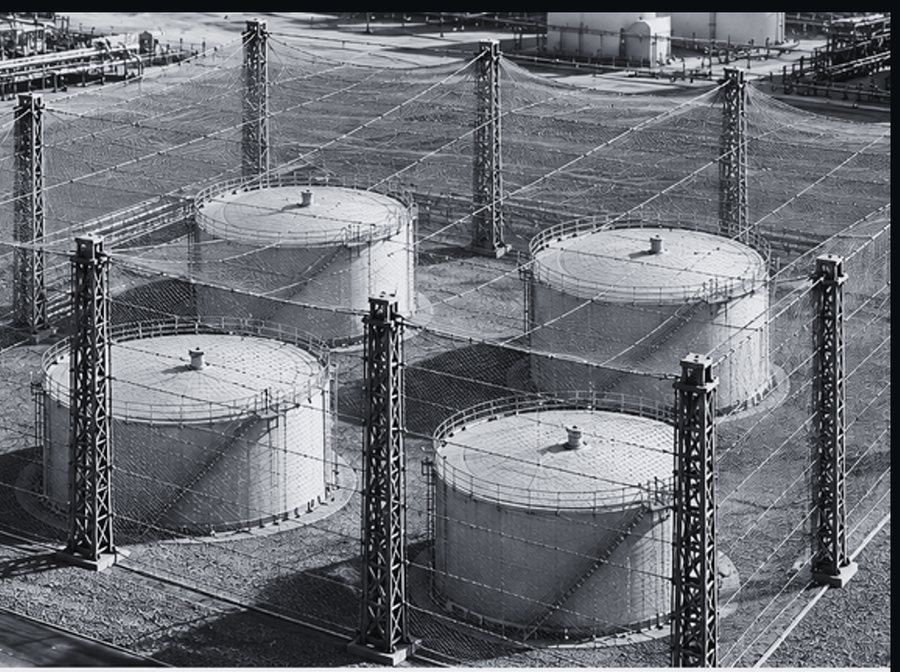
A tensioned steel mesh and cable-net envelope carried on structural towers. The mesh catches the aircraft, the cable net absorbs the energy and spreads it, and the towers carry it down to the foundations. Mesh, cables, towers and connections are sized as one structural system — not assembled from parts that happen to fit.

Why standoff is the whole point

A drone carrying a shaped or fragmentation charge does its damage as a function of distance. Moving the detonation point eight metres away from a tank shell is not a marginal improvement — it is a different event. We calculate the separation from the expected charge weight, the approach speed and mass of the aircraft, and the vulnerability of what sits behind.

Configurations

Perimeter only, overhead only, or a closed envelope. Spans and heights follow the facility layout rather than a fixed module.

ApplicationsCrude and product storage tanks · process units · substations · pump stations · pipeline manifolds
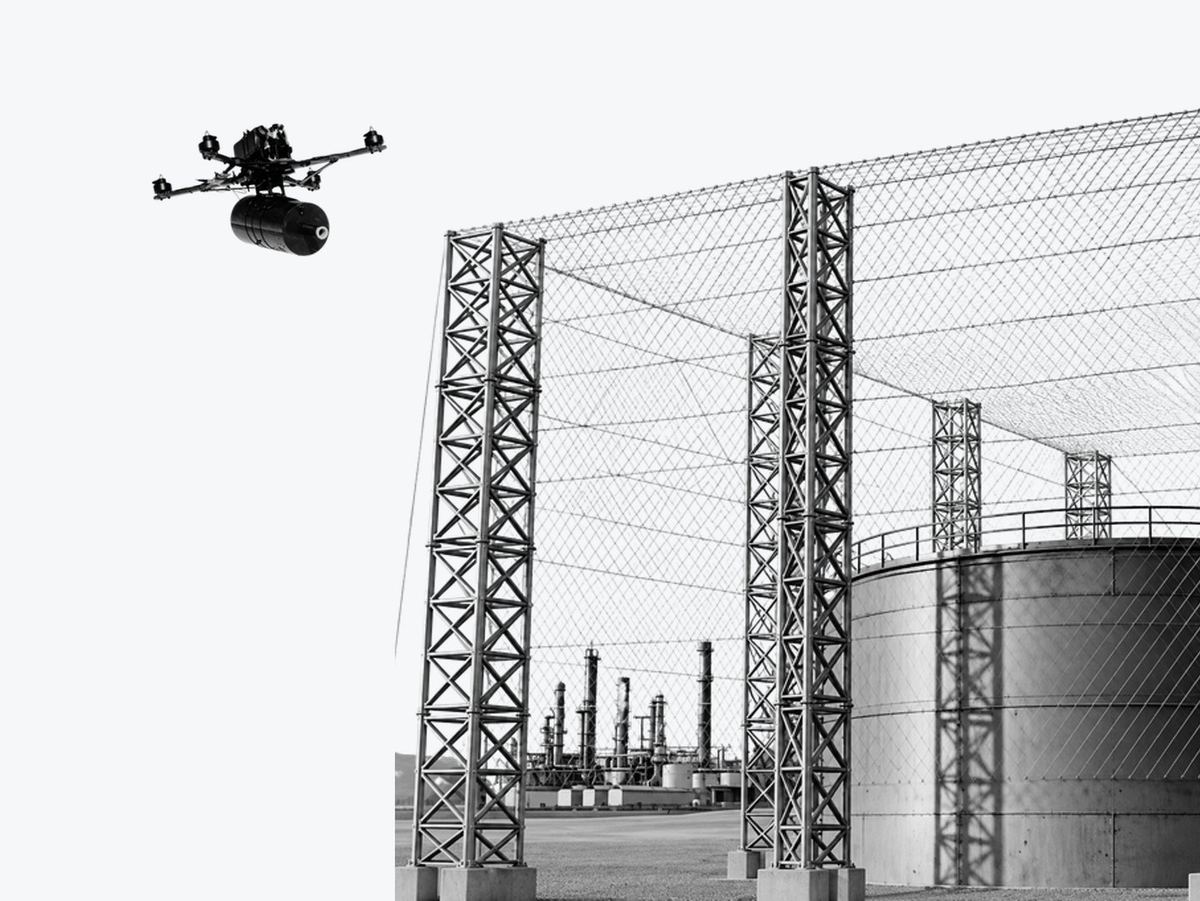
Drone Interception Fence
Interception envelope over a fuel storage area — indicative configuration
Blast & fragment

Armoured Blast & Fragment Barrier

Outer fence · calculated standoff · armour steel + UHMWPE

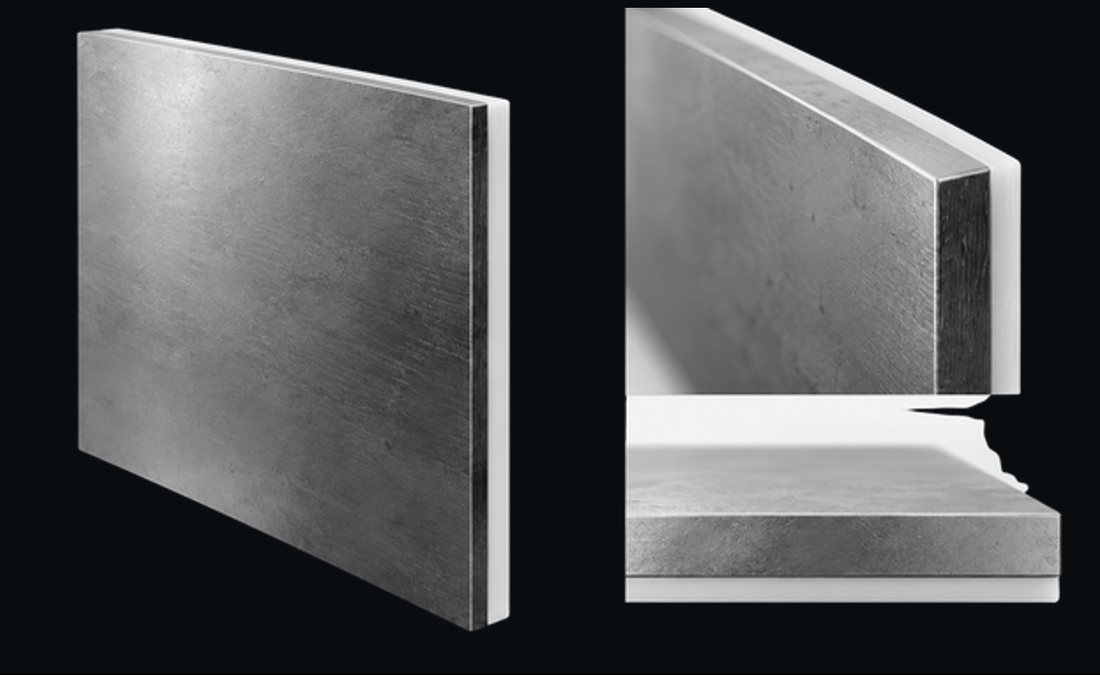
Where interception alone is not enough, two more layers are added. An outer fence line sets the standoff. Behind it, the asset surface itself is armoured with a steel plate and UHMWPE composite build-up: the steel defeats the fragment, the polyethylene backing catches spall and secondary debris so nothing comes off the protected face.

Engineered, not assumed

Plate grade and thickness, backing thickness and the standoff distance are derived from the threat definition — charge mass, standoff, fragment mass and velocity distribution, and the overpressure and impulse reaching the surface. The same methodology we use to verify blast doors to UFC 3-340-02 applies here, with explicit non-linear dynamic analysis rather than rules of thumb.

Where it goes

Any surface where penetration of the protected side is unacceptable, and where the consequence of a single fragment is out of proportion to its size.

ApplicationsControl rooms · operator shelters · switchgear buildings · critical valve stations · ammunition and fuel storage

Armoured Blast & Fragment Barrier
Armour steel and UHMWPE build-up — section through the protected surface
Relocatable

Modular Protection Enclosure

Bolted frames · tensioned wire mesh · no welding on site

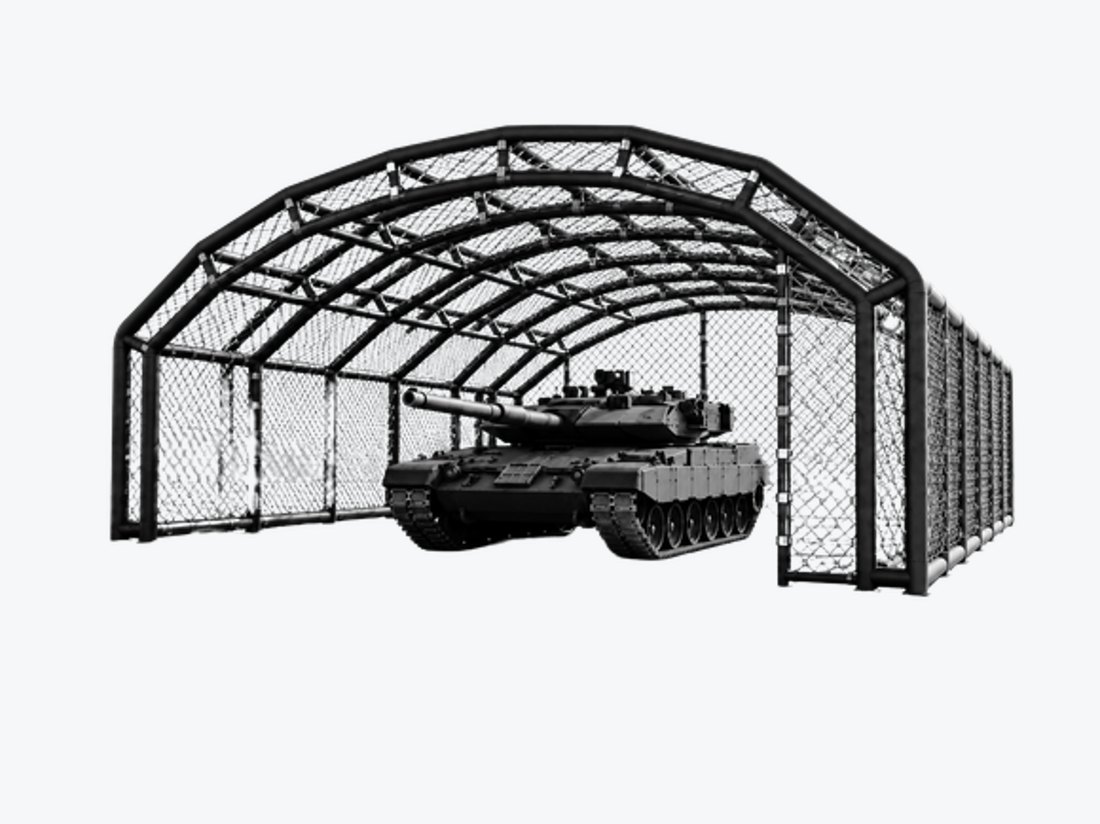
A prefabricated frame system that encloses a single asset — a vehicle, a generator, a containerised unit, a tank — without permanent towers or long-span structure. Frames arrive bolted and flat-packed; side and overhead panels are high-strength steel wire mesh tensioned between the frames.

Built to be moved

Any section can be removed, replaced or extended on its own. When the threat axis changes, or the asset moves, the enclosure follows it. Assembly needs no welding and no heavy foundation work.

The trade-off, stated plainly

A modular enclosure gives up some of the standoff distance a full tower system provides. It is the right answer when deployment speed and relocation matter more than maximum separation — and we will tell you when it is not.

ApplicationsForward installations · temporary facilities · vehicle and equipment parks · construction phases · assets awaiting a permanent scheme

Modular Protection Enclosure
Bolted modular enclosure over a single asset — indicative configuration

What is engineered, and what you receive

Nothing here is a catalogue item. Every configuration starts from a threat definition and ends with calculations you can hand to a third-party checker.

01

Threat definition

UAV type and mass, approach speed and angle, charge weight and type, fragment mass and velocity distribution, and the overpressure and impulse reaching the surface.

02

Structural response

Non-linear dynamic analysis of the mesh, cable net and supporting structure under impact, and of the armour build-up under blast and fragment loading.

03

Standoff calculation

The separation distance is derived from the charge and the vulnerability of the asset behind it — not taken from a standard drawing.

04

Documentation

Structural calculations, impact analysis, foundation and anchorage loads, fabrication and installation drawings, material certificates.

Delivered with Flow&Art Space Engineering

Protection system design and impact engineering are developed by Flow&Art Space Engineering. Doorsmar contributes blast engineering, steel fabrication, surface protection and site delivery — the same scope we run on blast resistant door programmes.

Delivered with Flow&Art Space Engineering
Bu sayfanın Türkçesi mevcut. Türkçe sayfaya geç →